
Top challenges in commercial construction present a unique set of hurdles that industry professionals must navigate to ensure project success. These challenges encompass a wide range of issues from supply chain disruptions to regulatory compliance that can heavily influence timelines and budgets.
Understanding the intricacies of these obstacles not only helps in planning but also enhances the ability to adapt and innovate, ultimately leading to more efficient and sustainable construction practices.
Challenges in Commercial Construction
In the ever-evolving landscape of commercial construction, various challenges consistently test the resilience and adaptability of project teams. Understanding these obstacles is crucial for stakeholders aiming to navigate the complexities of the industry effectively. This discussion highlights the top challenges encountered in commercial construction, focusing on supply chain disruptions and the intricacies of regulatory compliance.
Top Three Challenges in Commercial Construction
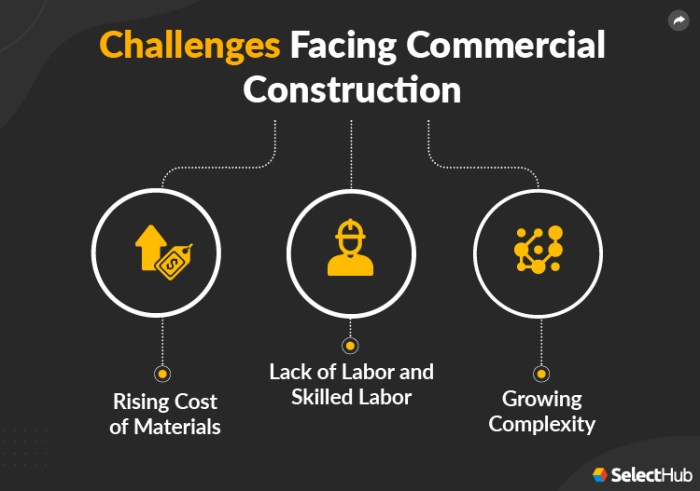
The commercial construction sector faces numerous challenges, but three stand out due to their significant impact on project execution and outcomes. They include:
- Supply Chain Disruptions
- Regulatory Compliance Complexities
- Labor Shortages and Skill Gaps
The first challenge, supply chain disruptions, has gained attention in recent years, particularly due to global events that have affected material availability and delivery timelines. These disruptions can lead to unforeseen delays and increased costs, ultimately impacting the overall budget and schedule of a project.
Impact of Supply Chain Disruptions
Supply chain disruptions create a ripple effect throughout the construction process, influencing timelines, budgets, and the quality of the final product. For instance, when essential materials such as steel or concrete are delayed, project managers often face difficult choices, such as sourcing alternative materials at a higher cost or modifying project timelines. Supply chain issues can lead to:
- Increased material costs due to scarcity
- Extended project timelines resulting from delays in material delivery
- Potential penalties or loss of contracts due to unmet deadlines
“A streamlined supply chain is essential for maintaining budgetary constraints and project schedules in commercial construction.”
Significance of Regulatory Compliance
Regulatory compliance is another critical challenge in commercial construction, often characterized by complex and varying local, state, and federal laws. Compliance with these regulations is essential to avoid legal repercussions and ensure the safety and quality of construction projects.The importance of regulatory compliance includes:
- Ensuring safety standards are met to protect workers and the public
- Adhering to environmental regulations that can impact project design and materials used
- Maintaining proper documentation and permits to avoid fines and project delays
Navigating these complexities requires project teams to stay informed about changes in regulations, invest in compliance training, and engage legal experts when necessary.
“Non-compliance with regulatory standards can lead to significant financial penalties and project shutdowns.”
Real Estate Considerations in Commercial Construction
In the world of commercial construction, the interplay between real estate trends and construction planning cannot be overstated. Understanding how shifts in the commercial property market impact construction projects is crucial for developers, investors, and contractors alike. The nuances of real estate can dictate the direction and feasibility of construction endeavors, making it essential to stay informed about market dynamics.Commercial property market trends directly influence construction planning through factors such as demand, location, and zoning regulations.
When the market is booming, there is typically a surge in demand for commercial spaces, which can lead to increased construction activity. Conversely, during downturns, developers may need to reassess their plans or postpone projects. Key aspects that affect these trends include:
- Location: Properties in prime areas often see greater demand, prompting developers to invest heavily in those locations.
- Market Demand: Fluctuations in demand for retail, office, and industrial spaces can dramatically alter construction schedules and project scopes.
- Zoning Regulations: Changes in local zoning laws can either facilitate or hinder construction, impacting project timelines.
Relationship Between Real Estate Agents and Procurement of Commercial Properties
Real estate agents play a vital role in the procurement of commercial properties, serving as intermediaries between buyers and sellers. Their expertise is invaluable for navigating the complexities of the commercial property market, and they often provide insights that can shape construction projects. The relationship with real estate agents can affect several aspects, including:
- Market Insights: Agents have their finger on the pulse of local and national trends, offering data that can inform construction decisions.
- Negotiation Skills: Effective negotiation can secure better prices and favorable terms for construction projects, making agents an essential ally.
- Access to Listings: Agents provide access to exclusive listings, which can lead to advantageous procurement opportunities.
Building Homes in Commercial Construction Environments
While commercial construction primarily focuses on retail, office, and industrial facilities, the concept of building homes within these environments is gaining traction. Mixed-use developments, which combine residential and commercial elements, are becoming increasingly popular. This trend reflects a shift towards creating more integrated and vibrant communities. Key points regarding this trend include:
- Community Development: Mixed-use projects foster a sense of community and can enhance property values.
- Urban Density: Building homes in commercial areas helps address housing shortages in urban centers where space is limited.
- Synergy: The coexistence of residential and commercial spaces can lead to increased foot traffic, benefiting both sectors.
Innovations and Solutions in Overcoming Challenges
In the ever-evolving landscape of commercial construction, challenges are met with innovative solutions that not only enhance project outcomes but also respond to the growing demand for sustainability and efficiency. By leveraging advancements in technology and design, stakeholders in the real estate and construction sectors can create spaces that are not only structurally sound but also environmentally responsible. This section highlights key innovations and solutions that address common challenges in the industry.
Green Real Estate Initiatives Addressing Environmental Challenges
Sustainability has become a primary focus in construction, leading to the emergence of numerous green real estate initiatives. These initiatives aim to reduce environmental impact while also providing economic benefits. Examples of such initiatives include:
- LEED Certification: The Leadership in Energy and Environmental Design (LEED) program encourages the construction of sustainable buildings by providing a framework for identifying and implementing practical and measurable green building design, construction, operations, and maintenance solutions.
- Net-Zero Energy Buildings: These buildings produce as much energy as they consume, primarily through renewable energy sources like solar panels, which significantly reduce their carbon footprint.
- Use of Sustainable Materials: Innovations in material science have led to the development of sustainable materials such as recycled steel, bamboo, and reclaimed wood, which are increasingly being utilized in new commercial constructions.
- Green Roofs: Installing green roofs not only helps with insulation and energy efficiency but also contributes to urban biodiversity and stormwater management.
Effective Home Staging for Newly Constructed Commercial Properties
Home staging plays a critical role in enhancing the appeal of newly constructed commercial properties. Well-executed staging can create inviting environments that resonate with potential tenants or buyers. Key methods for effective staging include:
- Highlighting Space: Open floor plans should be accentuated by using furniture that defines different areas, thereby showcasing the full potential of the space.
- Use of Natural Light: Maximizing natural light through strategic placement of mirrors and low-profile furniture can make spaces feel larger and more welcoming.
- Neutral Color Palettes: Employing neutral colors helps potential clients envision their own aesthetic in the space, making it more relatable and appealing.
- Incorporating Technology: Demonstrating smart building technology in staging can attract tech-savvy tenants looking for modern conveniences.
Integrating Real Estate Investing Strategies with Commercial Construction Projects
A strategic framework for integrating real estate investing with commercial construction involves understanding market trends, aligning project goals with investment strategies, and leveraging financial tools to maximize returns. This framework can include:
- Market Analysis: Conduct thorough research to identify emerging markets and investment opportunities that align with commercial construction projects.
- Risk Management Strategies: Implement measures such as diversification and insurance to mitigate potential risks associated with construction investments.
- Partnership Development: Form alliances with local investors, contractors, and other stakeholders to enhance resource sharing and market access.
- Utilizing Financing Options: Explore various financing avenues such as crowdfunding, real estate investment trusts (REITs), and traditional loans to fund construction projects while maintaining liquidity.
“Innovations in construction are not just about building; they are about creating a sustainable future.”
Ending Remarks
In summary, addressing the top challenges in commercial construction is crucial for the overall health of the industry. By recognizing these obstacles and implementing innovative solutions, stakeholders can not only overcome current issues but also pave the way for a more resilient future in commercial construction.
Top FAQs
What are the main challenges in commercial construction?
The main challenges include supply chain disruptions, regulatory compliance complexities, and fluctuating real estate market trends.
How do supply chain disruptions affect projects?
They can lead to delays, increased costs, and difficulties in obtaining necessary materials, which can ultimately derail project timelines.
What role does regulatory compliance play in construction?
Regulatory compliance ensures that projects meet legal standards and safety requirements, but navigating these regulations can be complex and time-consuming.
How can innovations improve the construction process?
Innovations such as green initiatives and advanced technologies can streamline operations, reduce environmental impact, and enhance project appeal.
Why is real estate market analysis important in construction planning?
Market analysis informs construction planning by highlighting trends that influence property demand, pricing, and overall project feasibility.


